The art of conversation

Much emphasis is placed on knowing what to say.

Finding the correct words at the ideal moment. And structuring those words effectively.

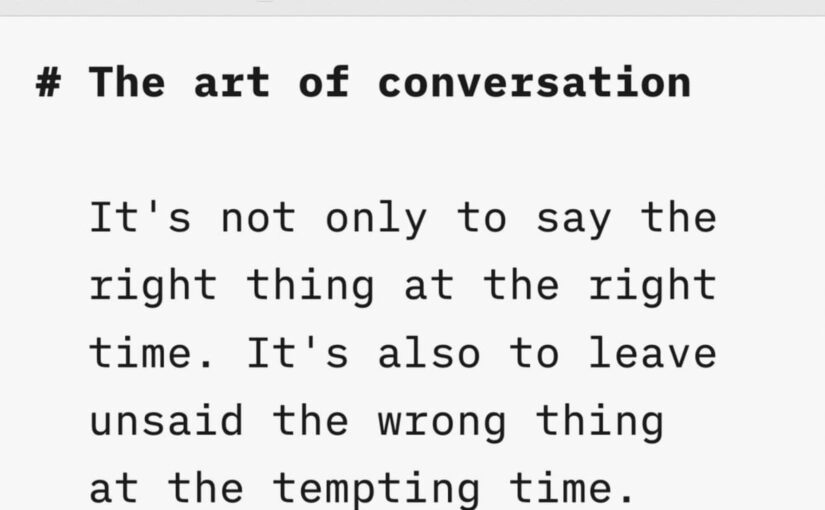
But there’s another component of communication that we need to learn. Specifically, how to avoid saying the wrong thing, at the tempting time.

Sometimes, silence is golden. At least for a while.

Reality Distortion Field, or just self-confidence?

When you hear Steve Jobs’ former colleagues describe him, they often say he created a Reality Distortion Field. Whatever he told them, they felt compelled to believe. This was true even if they were really sceptical to begin with.

There was no magical field. What they’re referring to is the power of Jobs’ self-belief.

It works both ways.

Smart people who lack self-belief also create a Reality Distortion Field. A negative one. The reality of their intelligence and creativity is horribly distorted. Their ideas and opinions are often dismissed, even if they’re brilliant. Because it’s hard for people to believe in someone, who doesn’t believe in themselves.

Clearly, self-belief is exceptionally valuable in every area of life.

Thankfully, self-belief is also something we create internally.

Nature, nurture or something else?

I’ve just read “The Hidden Half: How the World Conceals its Secrets”, by Michael Blastland.

And it seems the common ‘nature versus nurture’ debate is critically flawed. The flaw, Blastland posits, is that there’s a 3rd option.

It should be “nature, nurture or neither“.

The book, and a ton of scientific research, shows that genes and environment (combined) only account for around half our outcomes. The remaining half is a chasm of possible factors, which skewers much of the data out there. Data used by health professionals, governments, scientists and just about everyone else.

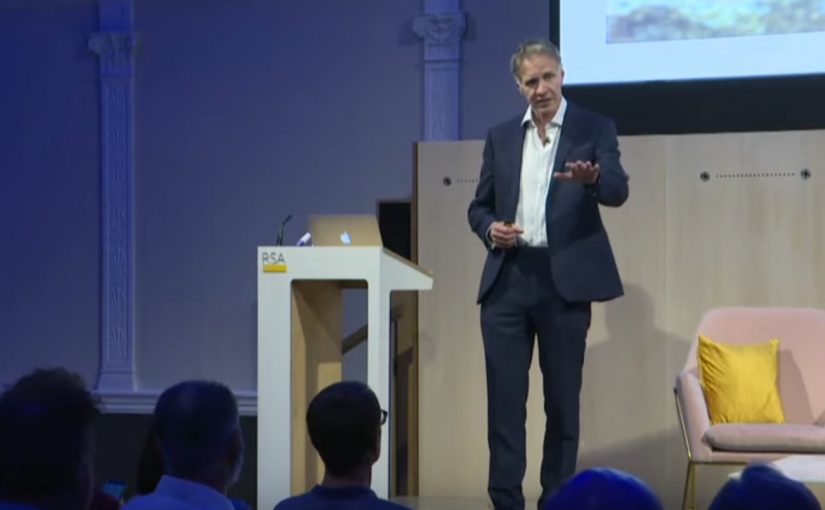
Rather generously, The RSA has published a video presentation by Blastland, which gives a superb look into his findings (see below). If you enjoy the presentation, you’ll probably find the book interesting too.

It’s an eye-opener, for sure.

Why Growth Hacking never seems to work

Photo: Shutterstock.

Growth hacking, the concept of reversing the law of cause and effect, is an appealing idea. It says you can get the reward before, or without, the effort.

Maybe the best example of this flawed approach, is the fad diets industry. These diets promise weight loss, with little or no effort. The reason there are so many of them on the market, is that they don’t work. So advocates jump from failed diet to failed diet.

And as a growing number of entrepreneurs are discovering, growth hacking is just as ineffective when it comes to business success. Hacks to get you noticed, hacks to make you influential, hacks to get rich quick are fatally flawed.

And here’s why.

Value

Business success is all about bringing value to your marketplace. The marketplace demands; honesty, innovation, dedication, reliability, fairness, durability, passion, commitment, professionalism, etc.

By default, anything that can be done by the masses, with a quick hack, lacks that kind of value.

An alternative approach is to learn from the successes of others. Read the books. Do the studying. Do the work. It may not sound as sexy as growth hacking. But it makes more sense than trying to break universal laws.

Blogging from your phone? Maybe you should. Here’s why!

I did some testing earlier and wanted to share my experience with you.

There’s a key area, where WordPress lagged behind social networks and services like Tumblr. I’m referring specifically to posting updates direct from your phone.

It has always been technically possible. However, the experience was horrible. So, earlier today, I decided to see if the the WordPress iPhone app had improved. I wanted to know if adding links, formatting text and inserting images had improved.

It has. A lot

I last checked it out around a few years ago. Back then, WordPress via the iPhone was fine for writing draft posts. But they would need to be edited and tidied up on a larger device. And adding links to text was, at best, really frustrating.

Today, it’s extremely easy and user friendly. None of the old issues are there.

No, it’s not a full desktop blogging experience. I never expected it would be.

But it works! It’s a breeze to use, too. In other words, it’s easy now to blog “on the go” straight into WordPress.

And that’s what many of us have been waiting for.

Now that blogging on WordPress is truly mobile, I’ll look to incorporate it into my weekly blogging. I’ll let you know how I get on.

More importantly… if you haven’t checked out the WordPress app for iOS or Android in a while, take another look. You too may be pleasantly surprised.

And yes, this post was written and published, from scratch, in about 25 minuets using a Phone.

Overcoming loneliness

Social networks and mobile communications are connecting people like never before. This begs the question: Why does study after study confirm that loneliness is at an all time high?

I don’t have the answer. But maybe it’s because people are replacing face-to-face interactions with virtual ones?

Think about it.

 We find out how the people in our lives are doing on our main social app, without actually meeting them. We can shop from home, without having to visit the local store. We can watch a movie on Netflix, without leaving our home. And many of us can go to work, without actually “going” anywhere.

There are many, many other examples. All of which allow us to live our lives, with an absolute minimum of human contact.

I thought I’d test my theory. Here’s what happened

Around 18 months ago, I decided to get out more and meet more people. I wasn’t feeling lonely. I have a great family and I’m blessed with many good friends. But I knew I wasn’t meeting new people like I used to. So, I decided to make some changes and see if it improved the quality of my life.

Here are a few of them.

  • I swapped an exercise bike for an outdoors bike.
  • I swapped a treadmill machine for walking around the village where I live.
  • I swapped working exclusively from my home studio, for working a few hours, twice a week, from what Andy Ihnatko calls field offices.
  • I swapped texting my friends for having a coffee with at least one of them every week.

The difference this made was huge. Way bigger than I could have imagined. I now see my friends more often. I’ve also made a lot of new friends; people I’d never have met, without the changes I made. Plus, it has massively improved the quality and volume of my work.

In short, I feel so much better in every area of my life. That’s despite having not actually felt lonely before. I can only imagine what impact this approach might have, for someone who is feeling lonely.

I honestly have no idea if sharing this will help anyone else. But spending more time with people offline has been transformational for me.

The simple experiment that expanded my mind

Around a decade ago, I decided to try something. It’s allowed me to have a far more balanced view of the world and also, helped me understand people at a way deeper level.

And today, I’m going to share it with you.

How I expanded my mind

I decided to leave my echo chamber.

Here’s what that means: Instead of subscribing to websites, social media accounts, magazines, radio stations etc., which shared my point of view… I threw it open. I started to also pay attention to those, with completely opposite views to myself.

Initially, I planned to do it for 7 days. But before the week was over, I found myself able to better understand why people had different beliefs to my own. I also found that many things I assumed were right, were, at best neutral. And in many cases, I found my long-held points of view were totally wrong.

Perhaps more importantly, I was able to empathise with people at a more personal, less biased level.

Note: This doesn’t mean I agree with everything, everyone thinks. It does mean I can understand WHY. It let’s me appreciate their point of view, without having to hold their point of view.

I’ve done this ever since. And it’s improved my life in many, many ways. So, maybe you might want to give it a try?

Just for a few days. Follow politicians on your main social network, who have opposing views to you. Listen to podcasts or radio stations, that support something you currently see no value in. Read a newspaper, that’s biased against your current perspective.

And see what you can learn.

Fake News needs our support

The fake news phenomena really interests me. And with hindsight, I don’t know why it’s only become a mainstream issue in the past 10-years or so.

After all, everyone can be a publisher these days. And most of us are. Billions of people have social accounts and hundreds of millions of us have newsletters, or podcasts, or YouTube channels or blogs too. In other words, we’re all equipped to spread whatever information or misinformation we choose.

I was thinking about this recently, when my friend told me about the challenge he had, helping his daughter with some school work. He explained that time and again, it was easier to find low quality “content” than expertly-crafted articles. For instance, Google regularly ranks Pinterest posts above museum articles, when you’re looking for a reliable source of historic information.

The answer?

Technology certainly has a huge role to play. And the tech companies who have profited mightily from fake news need to start taking it seriously, rather than offering platitudes.

But I don’t think technology is the answer by itself.

Ultimately, the solution to the fake news problem has to be education. More specifically, education on how to discern between reliable or credible sources and those that are not. There needs to be a clear message, that just because an article is ranked highly on Google, or a Bluesky post has a ton of likes, it doesn’t mean the source is credible or the information is reliable.

We’re part of the problem

That’s because search engines, social networks and our friends can’t be fooled without our help.

Here’s why.

  • When we link to a fake news story, it’s almost like voting for it. Each link sends Google and the other search engines a signal. And the more links a story gets, the higher it will rank in search results.
  • When we like or share a video, or Instagram post/reel we give it added visibility and increase it’s social proof.

Thankfully, this also means we can become part of the solution. We can choose to ensure we check the source of information, before we link to it or share it.

And we can ask our friends to do the same. Like I just did.

I screwed up. Not her!

I was contacted by someone last week, who said she wanted to know more about working with me. I could tell after 15 minutes of speaking with her, that she was just trying to score some free marketing advice. I gave her some ideas, then politely ended the call.

After the call finished, I felt frustrated with her for being so selfish. I was annoyed with her for wasting my time. And I was wrong!

It was my free choice to speak with her. She couldn’t have wasted my time, without my active consent. Had I been a little more careful, I’d have known she was a time waster before speaking with her. All the clues were there. But I dropped my guard. And I paid the price.

Here’s why I’m sharing this with you

Ultimately, we all choose where we surrender our time, attention and energy. It’s our decision.

Whenever something like this happens, I’ve found that the best thing to do is:

  1. Quickly accept responsibility.
  2. Look for the lesson and learn from it.

This approach means that my time waster wasn’t a time waster. She taught me a lesson and also gave me something to share with you. That’s not a bad return, for a 15 minute investment.